Logan, IA · Harrison County
Basement Water Removal in Logan, IAEmergency Basement Flooding & Basement Wall Drying
Basement Water Removal in Logan includes basement water pump out, basement drying services and basement moisture inspection.
Answered 24/7
Basement Water Removal Solutions for Logan Homeowners
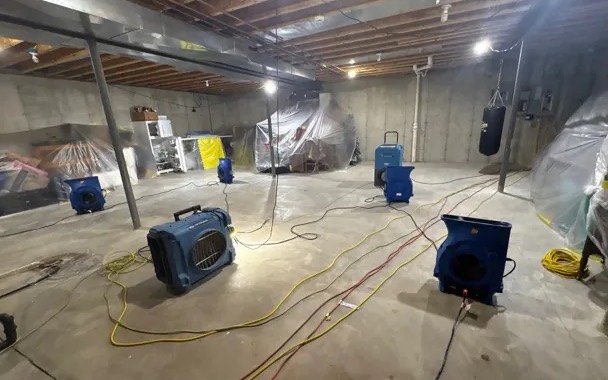
Dehumidification is the slow but necessary part of basement water removal in Logan. Pumps remove standing water quickly, but walls and concrete keep releasing moisture for days.
A single storm or burst pipe in Logan can flood a basement. Local basement drying experts serve Logan and nearby Missouri Valley, Woodbine and Honey Creek, with help available around the clock.
Comprehensive Basement Water Removal Solutions
Emergency Basement Flooding
A flooded basement threatens the furnace, water heater and anything stored on the floor. Fast pumping protects what can still be saved.
Basement Wall Drying
Concrete and block walls dry with directed airflow and dehumidification, which pull water out of the masonry.
Sump Pump Failure Water Cleanup
When a sump pump stops, groundwater spreads across the floor. The water is pumped out and the floor and lower walls are extracted.
Basement Floor Water Damage
Water on a basement floor soaks into carpet pad, laminate seams and the concrete itself. Floor coverings are lifted where needed so the slab can dry.
Basement Drying Services
Drying plans for basements account for cool air and thick concrete, which hold moisture longer than upper floors.
When to Call for Basement Water Removal in Logan
Water Stains on Walls or Ceiling
Stains on lower walls or the ceiling below a bathroom or kitchen point to a leak.
Warped or Buckling Flooring
Flooring that buckles, lifts or feels spongy has water trapped between it and the slab.
Rusted Appliances or Furniture
Rust on appliance bases, furniture legs or metal shelving points to standing water or long-term dampness.
Standing Water in Basement
Standing water anywhere on the basement floor needs to be pumped out before it soaks the walls.
How Basement Water Removal Works in Logan
Step 1: First Call and Initial Assessment
The source, the type of water and the depth are checked, and the water level is photographed.
Step 2: Bulk Water and Contaminant Removal
Pumps remove standing water, and carpet, pad or drywall touched by dirty water is removed.
Step 3: Drying With Monitoring
Dehumidifiers and air movers run around the clock, with readings logged every day on walls and slab.
Step 4: Post-Drying Evaluation and Documentation
Final readings and photos are compiled to show the basement is dry and what was removed.
Why Basements Flood in Logan
High Water Table and Hydrostatic Pressure
A high water table presses groundwater against the slab and walls, forcing it inside.
Improper Landscape Grading
Soil that slopes toward the house directs rainwater straight to the basement walls.
Plumbing Leaks or Pipe Bursts
Supply lines, drain pipes and water heaters in the basement can leak or burst onto the floor.
Foundation Cracks and Seepage
Cracks in foundation walls and the slab let groundwater seep in during wet weather.
Basement Water Removal for Homes and Businesses
Residential Basement Water Removal
In homes, a wet basement often means damaged carpet, drywall and stored belongings, plus a furnace or water heater sitting in water. Water is pumped out and the space dried.
Commercial Basement Water Removal
In commercial buildings, basements often house mechanical rooms and storage. Water is removed quickly so systems can be checked and restarted safely.
When to Hire Local Pros for Basement Water Removal
A small puddle on bare concrete can be handled with a wet vac, towels and a dehumidifier. Call local basement drying experts if water reached carpet, drywall or framing, or covers much of the floor.
Investing in Professional Basement Water Removal
Waterproofing and drainage work are separate costs. In Logan, they may be needed to stop the next flood.
Drying Time Required
Basements dry slowly, and each extra day of equipment adds to the total.
Time of Service
Night, weekend and storm calls can cost more than a scheduled weekday visit.
Access and Complexity
Narrow stairs, low ceilings and crowded storage areas make the work slower and longer.
Does Insurance Cover Basement Water Removal?
Photograph the water level, damaged belongings and appliances before cleanup, and keep receipts for emergency pumping and drying equipment for your adjuster.
The Value of Professional Basement Water Removal
Focus on Drying Outcomes
Drying continues until readings are normal, not just until surfaces look dry.
Methodical Water Removal Process
Water is removed in a set order: pump-out, extraction, removal of soaked materials, then drying.
24/7 Emergency Response
Help is available day or night when water is rising in the basement.
Round-the-Clock Basement Water Removal for Logan
Storm night, weekend or holiday, the experts handle basement water in Logan. Call (402) 704-4921 to get pumps running and drying started.
Call Now (402) 704-4921Local Basement Water Removal Coverage for Missouri Valley, Woodbine and Honey Creek
Besides Logan, the experts handle basement pump-outs, wall drying and dehumidification in nearby Missouri Valley, Woodbine and Honey Creek.
- Basement Water Removal in Missouri Valley
- Basement Water Removal in Woodbine
- Basement Water Removal in Honey Creek
- Basement Water Removal in Neola
- Basement Water Removal in Dunlap
- Basement Water Removal in Fort Calhoun
- Basement Water Removal in Crescent
- Basement Water Removal in Blair
- Emergency Damage Restoration in 51546
- Storm Damage Restoration in 51546
- Water Damage Restoration in 51546
- Water Extraction Service in 51546
- Water Leak Detection in 51546
- Water Removal Service in 51546
Basement Water Removal FAQs
What is involved in basement leak cleanup?
Stopping the leak, extracting the water, drying the floor and walls and checking for hidden moisture under flooring.
Is a sump pump failure an emergency?
Yes, especially during rain. Groundwater can rise quickly once the pump stops, flooding the floor and finished rooms.
What causes basement floor water damage?
Storm seepage, burst pipes, appliance leaks, foundation cracks and sewer backups through floor drains are the usual sources.
Why is basement dehumidification important after pumping?
Walls and concrete keep releasing moisture for days. Dehumidifiers remove it so the basement does not stay damp.
How is basement wall drying done?
Wet drywall is cut back, insulation removed and directed airflow and dehumidifiers dry the studs and masonry.