Honey Creek, IA · Pottawattamie County
Basement Water Removal in Honey Creek, IABasement Floor Water Damage & Basement Drying Services
Get basement water removal in Honey Creek for emergency basement flooding, basement water pump out and basement floor water damage.
Answered 24/7
Expert Basement Water Removal in Honey Creek, Crescent, Fort Calhoun and Missouri Valley
Basement Water Removal in Honey Creek starts with safety. Water near the furnace, water heater or electrical panel can be dangerous, so power is made safe before anyone steps into it.
In Honey Creek, when a basement or below-grade room takes on water, it usually follows heavy rain, a sewer backup or a burst pipe. Local basement drying experts serve Honey Creek, Crescent, Fort Calhoun and Missouri Valley, pumping water out and drying the space.
The Basement Water Removal Process in Honey Creek
Basement Floor Water Damage
Water on a basement floor soaks into carpet pad, laminate seams and the concrete itself. Floor coverings are lifted where needed so the slab can dry.
Basement Drying Services
Drying plans for basements account for cool air and thick concrete, which hold moisture longer than upper floors.
Emergency Basement Flooding
Emergency response starts with making power safe, stopping the source if possible and pumping out the water.
Basement Dehumidification
After drying, a household dehumidifier may still be needed to keep basement humidity in a healthy range.
Basement Moisture Inspection
An inspection shows how high water wicked up the walls and how far it spread under flooring, which sets the drying plan.
Indicators You Need Professional Water Removal
Efflorescence on Concrete Walls
White, powdery deposits on concrete walls mean water is passing through the masonry.
Wet or Damp Basement Walls
Basement walls that look dark, feel damp or show tide lines are taking on or holding water.
Musty Odors and Mold Smell
A musty or damp smell in the basement points to wet materials hidden somewhere in the space.
Mold or Mildew
Dark spots on drywall, framing or stored items mean the area has stayed wet for days.
How Basement Water Removal Works in Honey Creek
Step 1: Source Control and Water Pump Out
The leak is shut off and standing water is pumped out, starting at the lowest point.
Step 2: Water Extraction
Extractors pull water from carpet, pad and concrete, and wet vacs clear corners and stairs.
Step 3: Dehumidification and Drying
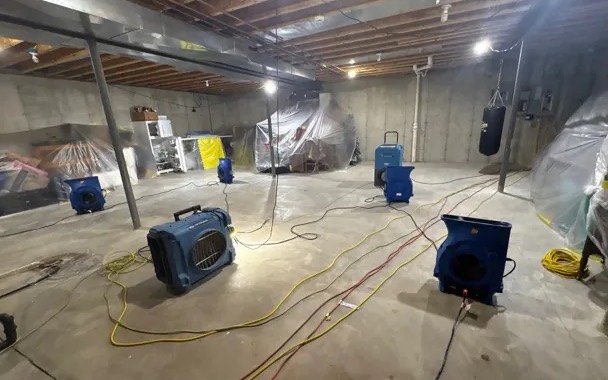
Large dehumidifiers and air movers dry walls, framing and slab over several days.
Step 4: Inspection and Clearance for Repair
Final readings confirm the basement is dry and ready for drywall and flooring repairs.
What Causes Water Damage in Basements
Sump Pump Malfunction or Power Loss
A sump pump that fails mechanically or loses power during a storm lets groundwater rise.
Improper Landscape Grading
Soil that slopes toward the house directs rainwater straight to the basement walls.
Window Well Leaks and Drainage
Window wells without drains or covers fill with rain and leak through the windows.
High Water Table and Hydrostatic Pressure
A high water table presses groundwater against the slab and walls, forcing it inside.
Professional Basement Water Removal for All Properties
Residential Basement Water Removal
Finished basements used as bedrooms or family rooms need careful moisture checks behind walls and under flooring, since that is where water hides.
Commercial Basement Water Removal
Businesses with below-grade storage need wet inventory moved out and documented. Drying is planned around daily operations wherever possible.
Professional Basement Water Removal Versus Do-It-Yourself
Checking appliance hoses and extending downspouts away from the house are good DIY steps before storm season. Once the basement floods, call (402) 704-4921 for help.
Understanding Basement Water Removal Pricing
The cost of basement water removal in Honey Creek depends on how deep the water is, what type of water it is and how much finished material has to come out.
Access and Complexity
Narrow stairs, low ceilings and crowded storage areas make the work slower and longer.
Time of Service
Night, weekend and storm calls can cost more than a scheduled weekday visit.
Additional Services
Antimicrobial treatment, contents cleaning and repairs after drying add to the cost.
Does Insurance Cover Basement Water Removal?
Coverage for basement water removal depends on the water source and your policy. The pros document the damage and drying, and your insurer decides what is covered.
Why Honey Creek Homeowners Trust Local Pros for Basement Water Removal
Post-Service Moisture Verification
Final readings are recorded before equipment leaves, so you know the basement is dry.
Industry Drying Standards
Water removal and drying follow industry water damage standards, with readings at every visit.
Clear Communication
You get plain updates on what was found, what was removed and how drying is going.
Round-the-Clock Basement Water Removal for Honey Creek
The faster a basement is pumped out, the more can be saved. Call (402) 704-4921 for basement water removal in Honey Creek as soon as you see water.
Call Now (402) 704-4921Basement Water Removal Serving Honey Creek and Surroundings
Help with basement water removal is also available in communities near Honey Creek, including Crescent, Fort Calhoun and Missouri Valley, for flooded basements and sewer backups.
- Basement Water Removal in Crescent
- Basement Water Removal in Fort Calhoun
- Basement Water Removal in Missouri Valley
- Basement Water Removal in Underwood
- Basement Water Removal in Carter Lake
- Basement Water Removal in Neola
- Basement Water Removal in Logan
- Basement Water Removal in Midtown
- Emergency Damage Restoration in 51542
- Storm Damage Restoration in 51542
- Water Damage Restoration in 51542
- Water Extraction Service in 51542
- Water Leak Detection in 51542
- Water Removal Service in 51542
Basement Water Removal FAQs
Can wet drywall in a basement be saved?
Sometimes, if the water was clean and removed quickly. Soaked or contaminated drywall is cut out above the water line.
Why is fast water removal so important for basements?
Basements dry slowly, so every hour of standing water adds drying days and more materials to replace.
How does a basement moisture inspection work?
Moisture meters and thermal cameras check walls, floors and the slab, including behind finished walls and under flooring.
What happens during basement moisture control?
Dehumidifiers and air movers keep humidity low while materials dry, and readings confirm when the space is normal.
Does basement flood cleanup include mold prevention?
Fast drying is the main prevention. Wood and concrete that stayed wet can be treated with an antimicrobial once dry.