Crescent, IA · Pottawattamie County
Basement Water Removal in Crescent, IABasement Wall Drying & Basement Dehumidification
Basement Water Removal in Crescent runs from basement water pump out and basement drying services to basement dehumidification.
Answered 24/7
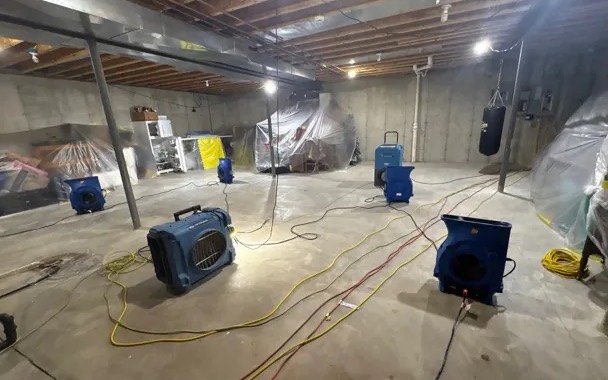
Expert Basement Water Removal in Crescent, Honey Creek, Carter Lake and Council Bluffs
In Crescent, a burst pipe or heavy rain can let water rise fast in a basement. The water usually spreads from the low point across the whole floor and into finished rooms.
Homeowners in Crescent can call (402) 704-4921 day or night when the basement is taking on water. Service also covers Honey Creek, Carter Lake and Council Bluffs, with the same pumping and drying steps.
Basement Water Removal Services in Crescent
Basement Wall Drying
Opening the bottom of finished walls lets air reach the studs and sill plate, which otherwise stay wet behind the drywall.
Basement Dehumidification
Dehumidifiers run continuously during drying, and their output is checked to track how much water is still coming out of the materials.
Basement Water Pump Out
When water is more than an inch or two deep, pumps move it far faster than wet vacs, which limits how long walls sit in water.
Basement Moisture Inspection
Moisture meters and thermal cameras check walls, floors and the slab for water that is not visible, including behind finished walls.
Sump Pump Failure Water Cleanup
Cleanup after a sump failure includes drying the area around the pit and noting whether the pump, switch or power was the cause.
Warning Signs You Need Basement Water Removal
Mold or Mildew
Dark spots on drywall, framing or stored items mean the area has stayed wet for days.
Soggy or Wet Carpeting
Carpet that feels damp or smells sour is holding water in the pad against the concrete.
Standing Water in Basement
Standing water anywhere on the basement floor needs to be pumped out before it soaks the walls.
Gurgling Sounds From Drains
Gurgling floor drains or slow drains can be an early sign of a sewer line problem.
How Basement Water Removal Works in Crescent
Step 1: Source Control and Water Pump Out
The leak is shut off and standing water is pumped out, starting at the lowest point.
Step 2: Water Extraction
Extractors pull water from carpet, pad and concrete, and wet vacs clear corners and stairs.
Step 3: Dehumidification and Drying
Large dehumidifiers and air movers dry walls, framing and slab over several days.
Step 4: Inspection and Clearance for Repair
Final readings confirm the basement is dry and ready for drywall and flooring repairs.
Why Basements Flood in Crescent
High Water Table and Hydrostatic Pressure
A high water table presses groundwater against the slab and walls, forcing it inside.
Foundation Cracks and Seepage
Cracks in foundation walls and the slab let groundwater seep in during wet weather.
Plumbing Leaks or Pipe Bursts
Supply lines, drain pipes and water heaters in the basement can leak or burst onto the floor.
Window Well Leaks and Drainage
Window wells without drains or covers fill with rain and leak through the windows.
Basement Water Removal for Homes and Businesses
Residential Basement Water Removal
Finished basements used as bedrooms or family rooms need careful moisture checks behind walls and under flooring, since that is where water hides.
Commercial Basement Water Removal
Businesses with below-grade storage need wet inventory moved out and documented. Drying is planned around daily operations wherever possible.
Basement Water Removal vs. DIY: When to Call the Pros
You can move belongings up off the floor and run the dehumidifier you already own. Drying soaked walls and slab needs larger equipment and readings to confirm the job is done.
Factors Affecting Basement Water Removal Cost
In Crescent, the drying phase usually costs more than the pumping, because basements need equipment running for several days.
Time of Service
Night, weekend and storm calls can cost more than a scheduled weekday visit.
Drying Time Required
Basements dry slowly, and each extra day of equipment adds to the total.
Access and Complexity
Narrow stairs, low ceilings and crowded storage areas make the work slower and longer.
Does Insurance Cover Basement Water Removal?
Ask your adjuster early how your policy treats seepage and sewer backups, since many policies limit or exclude both kinds of water.
Why Crescent Homeowners Trust Local Pros for Basement Water Removal
Industry Drying Standards
Water removal and drying follow industry water damage standards, with readings at every visit.
Advanced Drying Equipment
Pumps, extractors and large dehumidifiers remove water much faster than household tools.
Methodical Water Removal Process
Water is removed in a set order: pump-out, extraction, removal of soaked materials, then drying.
Round-the-Clock Basement Water Removal for Crescent
Basement taking on water in Crescent? Make power safe if you can, move what you can and call (402) 704-4921. Help is available 24/7.
Call Now (402) 704-4921Local Basement Water Removal Coverage for Honey Creek, Carter Lake and Council Bluffs
Besides Crescent, local basement water removal pros handle basement pump-outs, wall drying and dehumidification in nearby Honey Creek, Carter Lake and Council Bluffs.
- Basement Water Removal in Honey Creek
- Basement Water Removal in Carter Lake
- Basement Water Removal in Council Bluffs
- Basement Water Removal in Midtown
- Basement Water Removal in Underwood
- Basement Water Removal in Neola
- Basement Water Removal in Dundee
- Basement Water Removal in Fort Calhoun
- Emergency Damage Restoration in 51526
- Storm Damage Restoration in 51526
- Water Damage Restoration in 51526
- Water Extraction Service in 51526
- Water Leak Detection in 51526
- Water Removal Service in 51526
Frequently Asked Basement Water Removal Questions
Is a sump pump failure an emergency?
Yes, especially during rain. Groundwater can rise quickly once the pump stops, flooding the floor and finished rooms.
What equipment is used for basement water extraction?
Submersible pumps, extractors, wet vacs, air movers, large dehumidifiers and moisture meters to confirm drying.
How is basement wall drying done?
Wet drywall is cut back, insulation removed and directed airflow and dehumidifiers dry the studs and masonry.
What is involved in basement leak cleanup?
Stopping the leak, extracting the water, drying the floor and walls and checking for hidden moisture under flooring.
Can I dry my basement myself with fans?
Fans help with surface water, but walls and concrete need dehumidifiers and readings to dry fully.