Dundee, NE · Douglas County
Basement Water Removal in Dundee, NEBasement Floor Water Damage & Basement Water Pump Out
After a burst pipe or storm, Basement Water Removal in Dundee means basement water pump out, basement wall drying and basement drying services.
Answered 24/7
Local Basement Water Removal Services for Dundee
In Dundee, a finished basement or lower level takes more work after a flood. Carpet, pad, laminate, drywall and insulation all trap water against the concrete and framing.
For homes with a basement in Dundee, part of Omaha, water below grade often comes from seepage or a plumbing leak. Help with basement water removal covers Dundee, Midtown, Carter Lake and Ralston, from damp corners to fully flooded floors.
Basement Water Removal Services in Dundee
Basement Floor Water Damage
Water on a basement floor soaks into carpet pad, laminate seams and the concrete itself. Floor coverings are lifted where needed so the slab can dry.
Basement Water Pump Out
Pumping starts once power to the basement is safe. Deep water goes first, then extractors handle the thin layer left on the floor.
Basement Moisture Inspection
Moisture meters and thermal cameras check walls, floors and the slab for water that is not visible, including behind finished walls.
Basement Dehumidification
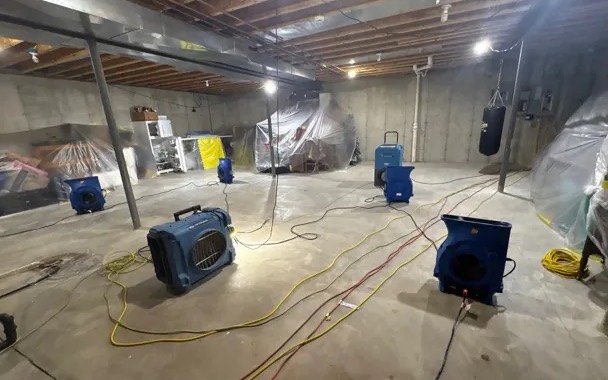
Dehumidifiers run continuously during drying, and their output is checked to track how much water is still coming out of the materials.
Basement Drying Services
Equipment stays until the basement reads dry, not just until it looks dry. Removing it early lets dampness return.
When to Call for Basement Water Removal in Dundee
Soggy or Wet Carpeting
Carpet that feels damp or smells sour is holding water in the pad against the concrete.
Water Stains on Walls or Ceiling
Stains on lower walls or the ceiling below a bathroom or kitchen point to a leak.
Warped or Buckling Flooring
Flooring that buckles, lifts or feels spongy has water trapped between it and the slab.
Sump Pump Failure or Overflow
A sump pit that is full, overflowing or has a pump that will not start means water is about to spread.
How Basement Water Removal Works in Dundee
Step 1: First Call and Initial Assessment
The source, the type of water and the depth are checked, and the water level is photographed.
Step 2: Bulk Water and Contaminant Removal
Pumps remove standing water, and carpet, pad or drywall touched by dirty water is removed.
Step 3: Drying With Monitoring
Dehumidifiers and air movers run around the clock, with readings logged every day on walls and slab.
Step 4: Post-Drying Evaluation and Documentation
Final readings and photos are compiled to show the basement is dry and what was removed.
What Causes Water Damage in Basements
High Water Table and Hydrostatic Pressure
A high water table presses groundwater against the slab and walls, forcing it inside.
Appliance Malfunctions and Overflows
Washers, utility sinks and water softeners in the basement can overflow or leak.
Sewer Line Backups and Blockages
A blocked sewer line can push wastewater up through basement floor drains and toilets.
Improper Landscape Grading
Soil that slopes toward the house directs rainwater straight to the basement walls.
Residential and Commercial Basement Water Removal in Dundee
Residential Basement Water Removal
In homes, a wet basement often means damaged carpet, drywall and stored belongings, plus a furnace or water heater sitting in water. Water is pumped out and the space dried.
Commercial Basement Water Removal
In commercial buildings, basements often house mechanical rooms and storage. Water is removed quickly so systems can be checked and restarted safely.
When to Hire Local Pros for Basement Water Removal
You can move belongings up off the floor and run the dehumidifier you already own. Drying soaked walls and slab needs larger equipment and readings to confirm the job is done.
Factors Affecting Basement Water Removal Cost
The pros look at water depth, water type and basement finishes before pricing basement water removal in Dundee, then explain the scope.
Access and Complexity
Narrow stairs, low ceilings and crowded storage areas make the work slower and longer.
Drying Time Required
Basements dry slowly, and each extra day of equipment adds to the total.
Additional Services
Antimicrobial treatment, contents cleaning and repairs after drying add to the cost.
Does Insurance Cover Basement Water Removal?
Photos, moisture readings and drying logs from local basement water removal pros help support an insurance claim for basement water damage in Dundee.
Advantages of Local Basement Water Removal Experts
Methodical Water Removal Process
Water is removed in a set order: pump-out, extraction, removal of soaked materials, then drying.
Contamination Safety Protocols
Sewage and dirty water are handled with protective gear, containment and disinfection.
Focus on Drying Outcomes
Drying continues until readings are normal, not just until surfaces look dry.
Emergency Basement Flood Response in Dundee
Standing water in a basement soaks walls and floors by the hour. Call (402) 704-4921 for basement water removal in Dundee at any time, day or night.
Call Now (402) 704-4921Basement Water Removal Near Dundee: Areas Served
Besides Dundee, the pros handle basement pump-outs, wall drying and dehumidification in nearby Midtown, Carter Lake and Ralston.
- Basement Water Removal in Midtown
- Basement Water Removal in Carter Lake
- Basement Water Removal in Ralston
- Basement Water Removal in Irvington
- Basement Water Removal in La Vista
- Basement Water Removal in Council Bluffs
- Basement Water Removal in Millard
- Basement Water Removal in Boys Town
- Emergency Damage Restoration in 68132
- Storm Damage Restoration in 68132
- Water Damage Restoration in 68132
- Water Extraction Service in 68132
- Water Leak Detection in 68132
- Water Removal Service in 68132
Basement Water Removal FAQs
Why is basement dehumidification important after pumping?
Walls and concrete keep releasing moisture for days. Dehumidifiers remove it so the basement does not stay damp.
What should I do right after basement flooding?
Make power safe, avoid sewage, move belongings above the water, take photos and call for water removal.
What equipment is used for basement water extraction?
Submersible pumps, extractors, wet vacs, air movers, large dehumidifiers and moisture meters to confirm drying.
What is the difference between a pump out and extraction?
A pump out removes deep standing water. Extraction pulls the remaining water from carpet, pad and floors.
How is basement wall drying done?
Wet drywall is cut back, insulation removed and directed airflow and dehumidifiers dry the studs and masonry.