Atlantic, IA · Cass County
Basement Water Removal in Atlantic, IABasement Wall Drying & Basement Dehumidification
Basement Water Removal in Atlantic runs from basement water pump out and basement drying services to basement dehumidification.
Answered 24/7
Expert Basement Water Removal in Atlantic and Oakland
A wet basement gets worse every hour the water stays. In Atlantic, water on a basement floor wicks up drywall, soaks carpet pad and seeps into the concrete, and cool below-grade air keeps it from drying on its own.
Homes in Atlantic and nearby Oakland with basements face storm seepage, sewer backups and plumbing leaks. Help with basement water removal covers pump-out, wall and floor drying and dehumidification.
Specialized Basement Water Removal for Atlantic
Basement Wall Drying
Concrete and block walls dry with directed airflow and dehumidification, which pull water out of the masonry.
Basement Dehumidification
After drying, a household dehumidifier may still be needed to keep basement humidity in a healthy range.
Basement Drying Services
Drying plans for basements account for cool air and thick concrete, which hold moisture longer than upper floors.
Sump Pump Failure Water Cleanup
A backup pump or battery system is worth discussing with a plumber after the cleanup, since sump failures often repeat in storms.
Basement Floor Water Damage
Flooring that buckled or swelled is removed. Tile and sealed concrete can often be cleaned and dried in place.
Warning Signs You Need Basement Water Removal
Musty Odors and Mold Smell
A musty or damp smell in the basement points to wet materials hidden somewhere in the space.
Mold or Mildew
Dark spots on drywall, framing or stored items mean the area has stayed wet for days.
Gurgling Sounds From Drains
Gurgling floor drains or slow drains can be an early sign of a sewer line problem.
Efflorescence on Concrete Walls
White, powdery deposits on concrete walls mean water is passing through the masonry.
How Basement Water Removal Works in Atlantic
Step 1: First Call and Initial Assessment
The source, the type of water and the depth are checked, and the water level is photographed.
Step 2: Bulk Water and Contaminant Removal
Pumps remove standing water, and carpet, pad or drywall touched by dirty water is removed.
Step 3: Drying With Monitoring
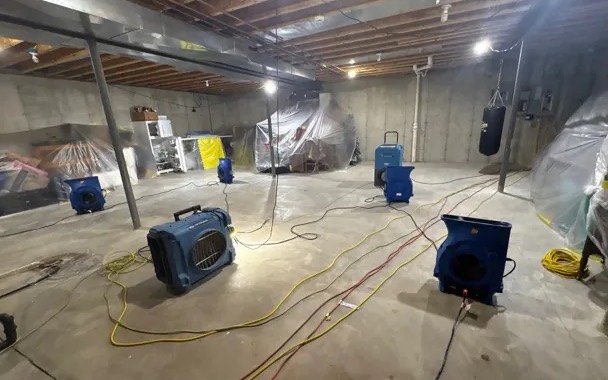
Dehumidifiers and air movers run around the clock, with readings logged every day on walls and slab.
Step 4: Post-Drying Evaluation and Documentation
Final readings and photos are compiled to show the basement is dry and what was removed.
What Causes Water Damage in Basements
Sewer Line Backups and Blockages
A blocked sewer line can push wastewater up through basement floor drains and toilets.
High Water Table and Hydrostatic Pressure
A high water table presses groundwater against the slab and walls, forcing it inside.
Improper Landscape Grading
Soil that slopes toward the house directs rainwater straight to the basement walls.
Foundation Cracks and Seepage
Cracks in foundation walls and the slab let groundwater seep in during wet weather.
Residential and Commercial Basement Water Removal in Atlantic
Residential Basement Water Removal
Older homes with a basement may see seepage with every heavy storm. Water removal handles the current damage, and the entry point is noted for a waterproofing contractor.
Commercial Basement Water Removal
Multi-unit buildings with shared basements need each storage and laundry area pumped, dried and documented for the property manager.
Why DIY Basement Water Removal Often Fails in Atlantic
Checking appliance hoses and extending downspouts away from the house are good DIY steps before storm season. Once the basement floods, call (402) 704-4921 for help.
What Influences the Price of Basement Water Removal
Waterproofing and drainage work are separate costs. In Atlantic, they may be needed to stop the next flood.
Time of Service
Night, weekend and storm calls can cost more than a scheduled weekday visit.
Water Depth and Volume
Deeper water takes more pumping time and usually means more materials got wet.
Additional Services
Antimicrobial treatment, contents cleaning and repairs after drying add to the cost.
Does Insurance Cover Basement Water Removal?
Photos, moisture readings and drying logs from local water damage pros help support an insurance claim for basement water damage in Atlantic.
Why Choose Local Pros for Basement Water Removal in Atlantic
Advanced Drying Equipment
Pumps, extractors and large dehumidifiers remove water much faster than household tools.
Moisture Inspection
Meters and thermal cameras find water in walls, floors and slab that looks dry.
Focus on Drying Outcomes
Drying continues until readings are normal, not just until surfaces look dry.
Emergency Basement Water Removal Available 24/7
Water still rising in the basement? Call (402) 704-4921 now for basement water removal in Atlantic before the water reaches finished rooms and stored belongings.
Call Now (402) 704-4921Basement Water Removal Serving Atlantic and Surroundings
The places below are also served, and each one has its own page.
- Basement Water Removal in Oakland
- Basement Water Removal in Red Oak
- Basement Water Removal in Underwood
- Basement Water Removal in Treynor
- Basement Water Removal in Neola
- Basement Water Removal in Malvern
- Basement Water Removal in Crescent
- Basement Water Removal in Woodbine
- Emergency Damage Restoration in 50022
- Storm Damage Restoration in 50022
- Water Damage Restoration in 50022
- Water Extraction Service in 50022
- Water Leak Detection in 50022
- Water Removal Service in 50022
Basement Water Removal in Atlantic: Your Questions
What is the difference between a pump out and extraction?
A pump out removes deep standing water. Extraction pulls the remaining water from carpet, pad and floors.
How long does basement drying take?
Often several days or longer, because concrete and cool basement air hold moisture. Daily readings show when it is done.
How is basement wall drying done?
Wet drywall is cut back, insulation removed and directed airflow and dehumidifiers dry the studs and masonry.
What causes basement floor water damage?
Storm seepage, burst pipes, appliance leaks, foundation cracks and sewer backups through floor drains are the usual sources.
What is involved in basement water removal?
Making power safe, pumping out standing water, extracting floors and carpet, removing soaked materials and dehumidifying until dry.