Dunlap, IA · Harrison County
Basement Water Damage Restoration in Dunlap, IABasement Dehumidification & Basement Wall Drying
Basement Water Damage Restoration in Dunlap runs from basement water extraction and basement floor water removal to basement dehumidification.
Answered 24/7
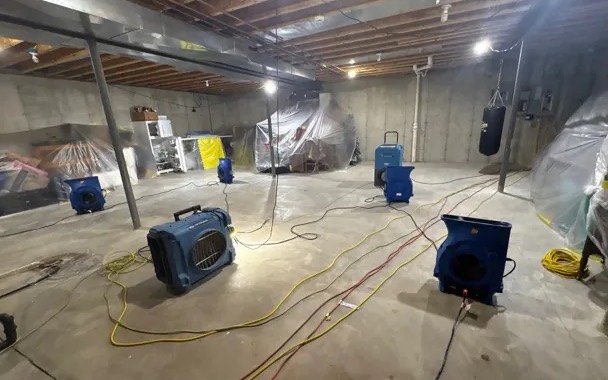
Local Basement Water Damage Restoration Near Dunlap
Basement Water Damage Restoration in Dunlap covers finished and unfinished basements. A bare concrete basement can often be pumped and dried. A finished one usually needs carpet, pad and lower drywall removed so the walls and slab can dry.
Homeowners in Dunlap can call (402) 704-4921 day or night when water is rising in the basement. Service also covers Woodbine, Denison and Logan, with the same pumping and drying steps.
The Basement Water Damage Restoration Process in Dunlap
Basement Dehumidification
Dehumidification continues until humidity and material readings are normal. Turning it off too early lets moisture return.
Basement Wall Drying
Wet drywall is cut back above the water line when it is soaked, and the wall cavity and insulation behind it are dried or replaced.
Basement Drying Services
Air movers and dehumidifiers are placed to dry walls, framing and the slab. Below-grade rooms dry slowly, so readings are taken daily.
Basement Sewer Backup Cleanup
Porous materials touched by sewage, such as carpet, pad and lower drywall, are removed. Concrete and framing are cleaned and disinfected.
Basement Water Extraction
Submersible pumps remove deep standing water, then portable extractors pull water from carpet, pad and the concrete floor.
Signs of Basement Water Damage in Dunlap
Peeling Paint or Wallpaper
Paint that peels or blisters on basement walls often has moisture behind it.
Sewage Odors or Backups
Sewage smells or water coming up through a floor drain mean the sewer line is backing up.
Sump Pump Failure or Overflow
A sump pump that runs constantly, fails to start or lets the pit overflow puts the basement at risk.
Mold on Surfaces
Dark spots on drywall, framing or stored boxes mean the area has stayed wet for days.
How Basement Water Damage Restoration Works in Dunlap
Step 1: Initial Assessment and Water Removal
The source and type of water are identified, and standing water is removed right away.
Step 2: Focused Drying of Materials
Walls, framing and the slab are dried with directed airflow, with wet insulation removed.
Step 3: Air Quality Management
Air scrubbers filter dust and odors from removal work while drying continues.
Step 4: Documentation for Restoration
Photos, readings and a list of removed materials are prepared for insurance and rebuilding.
Typical Sources of Basement Water Damage in Dunlap
HVAC Condensate Line Overflow
A clogged furnace or air conditioner condensate line can overflow onto the floor of a basement or lower-level utility room.
Clogged Floor Drains
A floor drain blocked by debris cannot carry off water from a leak or overflow, so it spreads across the basement floor.
Overland Flooding From Storms
Heavy storms and snowmelt can send surface water into basements through doors and walls.
Sewer Line Backups
A blocked or overloaded sewer line pushes wastewater up through basement drains and toilets.
Home and Business Basement Water Damage Restoration in Dunlap
Residential Basement Water Damage Restoration
A sewer backup in a home basement needs contaminated carpet, pad and drywall removed and every hard surface disinfected before drying.
Commercial Basement Water Damage Restoration
In restaurants and stores with basements, sewage backups need fast containment so contamination does not reach food or customer areas.
Basement Water Damage Restoration: Professional Help vs. Doing It Yourself in Dunlap
Fans alone can push damp air into the rest of the house. Basement drying needs dehumidifiers to pull the moisture out of the air and the concrete.
Cost Considerations for Basement Water Damage Restoration in Dunlap
A basement pumped and dried right away in Dunlap usually costs less than one left wet for days, when more drywall and flooring are lost.
Drying Time Required
Basements dry slowly, and longer drying means more equipment days and monitoring visits.
Emergency Service
Night, weekend and storm calls can cost more than a scheduled visit.
Material Saturation
Finished basements with carpet, drywall and insulation take more removal work than bare concrete.
Does Insurance Cover Basement Water Damage Restoration?
Many homeowner policies cover sudden basement water from a burst pipe, but not seepage or groundwater. Sewer backup coverage is often a separate add-on, so check your policy.
The Value of Local Pros for Basement Water Damage Restoration in Dunlap
24/7 Emergency Response
Help is available day or night when water is rising in the basement.
Mold Prevention Focus
Fast drying is the main way to limit microbial growth in a below-grade space.
Detailed Documentation
Photos, readings and drying logs are kept to support your insurance claim.
24/7 Emergency Basement Water Damage Restoration in Dunlap
If water is near outlets or the electrical panel, do not walk into it. Call (402) 704-4921 for help in Dunlap and wait for the power to be made safe.
Call Now (402) 704-4921Local Basement Water Damage Restoration Coverage: Dunlap and Beyond
Each place listed below has its own page with local details.
- Basement Water Damage Restoration in Woodbine
- Basement Water Damage Restoration in Denison
- Basement Water Damage Restoration in Logan
- Basement Water Damage Restoration in Missouri Valley
- Basement Water Damage Restoration in Onawa
- Basement Water Damage Restoration in Neola
- Basement Water Damage Restoration in Honey Creek
- Basement Water Damage Restoration in Tekamah
- Emergency Damage Restoration in 51529
- Storm Damage Restoration in 51529
- Water Damage Restoration in 51529
- Water Extraction Service in 51529
- Water Leak Detection in 51529
- Water Removal Service in 51529
FAQ for Basement Water Damage Restoration in Dunlap
How is basement sewer backup cleanup different from regular flooding?
Sewage carries bacteria, so it needs protective gear, removal of porous materials and disinfection before drying.
What does below-grade moisture removal include beyond pumping?
Extracting carpet and pad, opening wet walls, running air movers and dehumidifiers, and checking readings until dry.
Should I try below-grade waterproofing myself after flooding?
Sealing a small crack can be a DIY job, but drying must come first, and larger waterproofing work should go to a contractor.
How is basement restoration documented for insurance?
With photos of the water level and damage, moisture readings, a list of removed materials and daily drying logs.
How soon should I call for basement water extraction after a leak?
Right away. Water wicks up drywall and soaks framing within hours, and below-grade spaces are slow to dry.