Arlington, NE · Washington County
Basement Water Damage Restoration in Arlington, NEBasement Water Extraction & Basement Wall Drying
Basement Water Damage Restoration in Arlington includes emergency basement flood cleanup, basement sewer backup cleanup and basement wall drying.
Answered 24/7
Professional Basement Water Damage Restoration in Arlington, NE
In an Arlington home with a basement and a sump pump, a pump that fails during heavy rain lets water rise fast. Furnaces, water heaters, washers and stored belongings all sit at floor level and take the damage first.
One burst pipe or heavy storm in Arlington can flood a basement. Local restoration pros serve Arlington and nearby Fremont, Kennard and Washington, with help available around the clock.
Professional Basement Water Damage Restoration Offered in Arlington
Basement Water Extraction
Extraction starts at the lowest point, often near the floor drain or sump, and works outward until no pooled water remains.
Basement Wall Drying
Finished basement walls hide wet insulation and framing. Removing the bottom of the drywall lets air reach the cavity.
Basement Drying Services
Drying a basement takes longer than drying an upper floor because the air is cool and the concrete holds moisture.
Basement Mold Prevention
Keeping basement humidity low after drying helps prevent mold from returning, especially in finished spaces.
Emergency Basement Flood Cleanup
Emergency cleanup starts with stopping the source where possible, checking for electrical hazards and pumping out the water.
Signs of Basement Water Damage in Arlington
Sump Pump Failure or Overflow
A sump pump that runs constantly, fails to start or lets the pit overflow puts the basement at risk.
Damp or Musty Odors
A damp, earthy or musty smell in the basement often means hidden moisture in walls, carpet or the slab.
Efflorescence on Concrete Walls
White, chalky deposits on concrete walls mean water is moving through the concrete and leaving minerals behind.
High Humidity Levels Below-Grade
A basement that stays damp and clammy even on dry days has a moisture source that needs attention.
How Basement Water Damage Restoration Works in Arlington
Step 1: Water Removal
Pumps and extractors remove standing water from the basement floor, starting at the lowest point.
Step 2: Targeted Moisture Evaporation
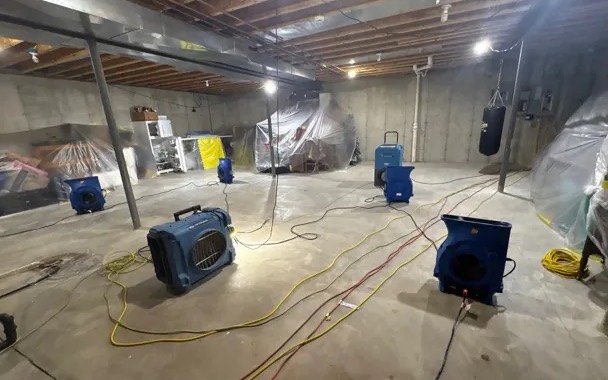
Air movers are aimed at wet walls, framing and the slab to speed evaporation.
Step 3: Humidity Control
Large dehumidifiers pull moisture from the basement air, with readings checked every day.
Step 4: Final Verification and Restoration
Final readings confirm the basement is dry, and the space is ready for drywall and flooring repairs.
Typical Sources of Basement Water Damage in Arlington
Clogged Floor Drains
A floor drain blocked by debris cannot carry off water from a leak or overflow, so it spreads across the basement floor.
Sewer Line Backups
A blocked or overloaded sewer line pushes wastewater up through basement drains and toilets.
Plumbing Pipe Bursts or Leaks
Supply lines and drain pipes in basement ceilings can crack or burst onto the floor below.
High Water Table and Hydrostatic Pressure
A high water table pushes groundwater up through the slab and into the joints between wall and floor.
Both Residential & Commercial Basement Water Damage Restoration in Arlington
Residential Basement Water Damage Restoration
Finished basements used as living space need carpet, pad and lower drywall checked carefully. Soaked materials are removed so the walls and slab can dry.
Commercial Basement Water Damage Restoration
Businesses with below-grade storage need inventory moved out of the water quickly. Wet stock is separated and documented for insurance.
Basement Water Damage Restoration: Professional Help vs. Doing It Yourself in Arlington
Fans alone can push damp air into the rest of the house. Basement drying needs dehumidifiers to pull the moisture out of the air and the concrete.
Understanding Basement Water Damage Restoration Pricing in Arlington
A basement pumped and dried right away in Arlington usually costs less than one left wet for days, when more drywall and flooring are lost.
Emergency Service
Night, weekend and storm calls can cost more than a scheduled visit.
Dehumidification Needs
Large dehumidifiers may need to run longer in below-grade spaces than in upper floors.
Drying Time Required
Basements dry slowly, and longer drying means more equipment days and monitoring visits.
Does Insurance Cover Basement Water Damage Restoration?
Photos, moisture readings and drying logs from local restoration pros help support an insurance claim for basement water damage in Arlington.
The Value of Local Pros for Basement Water Damage Restoration in Arlington
Industry Drying Standards
Drying follows industry water damage standards, with readings taken at every visit.
Structural Integrity Assessment
Walls, stairs and framing are checked for damage before work begins in the basement.
Mold Prevention Focus
Fast drying is the main way to limit microbial growth in a below-grade space.
Round-the-Clock Emergency Basement Water Damage Restoration in Arlington
If water is near outlets or the electrical panel, do not walk into it. Call (402) 704-4921 for help in Arlington and wait for the power to be made safe.
Call Now (402) 704-4921Basement Water Damage Restoration Serving Arlington, Fremont, Kennard and Washington
Need basement water damage restoration outside Arlington? Service also covers Fremont, Kennard and Washington, including emergency help during storms.
- Basement Water Damage Restoration in Fremont
- Basement Water Damage Restoration in Kennard
- Basement Water Damage Restoration in Washington
- Basement Water Damage Restoration in Nickerson
- Basement Water Damage Restoration in Valley
- Basement Water Damage Restoration in Bennington
- Basement Water Damage Restoration in Blair
- Basement Water Damage Restoration in Waterloo
- Emergency Damage Restoration in 68002
- Storm Damage Restoration in 68002
- Water Damage Restoration in 68002
- Water Extraction Service in 68002
- Water Leak Detection in 68002
- Water Removal Service in 68002
Basement Water Damage Restoration Common Questions Answered
Can wet basement drywall be saved after water damage?
Sometimes, if the water was clean and removed quickly. Soaked or sewage-contaminated drywall is cut out above the water line.
What is the purpose of basement wall drying?
To remove water from drywall, insulation, framing and concrete so the walls can be repaired without trapping moisture.
How long does below-grade drying take after a flood?
Often several days or longer, since concrete and cool basement air dry slowly. Daily readings show progress.
Is basement floor water removal different from carpet extraction?
Yes. Bare concrete is squeegeed and dried, while carpet and pad need extraction, and the pad is usually replaced.
What causes the most common below-grade leaks in homes?
Sump pump failures, foundation cracks, clogged drain tile, sewer backups and burst pipes in the basement ceiling.