Tabor, IA · Fremont County
Basement Water Removal in Tabor, IABasement Dehumidification & Basement Wall Drying
Basement Water Removal in Tabor handles basement wall drying, basement floor water damage and basement dehumidification before the space turns musty.
Answered 24/7
Basement Water Removal Solutions for Tabor Homeowners
A basement that looks dry a day after a flood in Tabor can still hold a lot of water in the slab, the bottom of the walls and under flooring. That hidden water causes the musty smell many basements have.
Homeowners in Tabor can call (402) 704-4921 day or night when the basement is taking on water. Service also covers Malvern, Sidney and Glenwood, with the same pumping and drying steps.
Specialized Basement Water Removal for Tabor
Basement Dehumidification
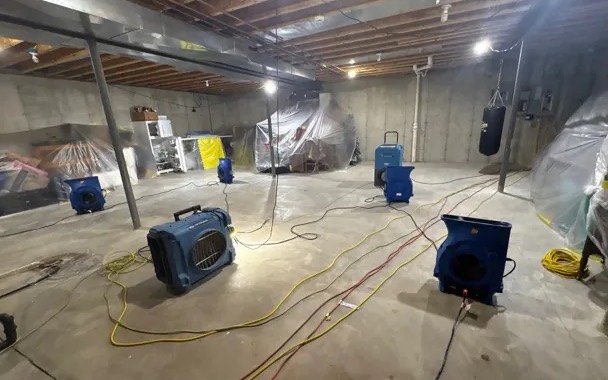
Large dehumidifiers pull moisture from basement air, which lets walls, framing and the slab release the water they absorbed.
Basement Wall Drying
Concrete and block walls dry with directed airflow and dehumidification, which pull water out of the masonry.
Sump Pump Failure Water Cleanup
Cleanup after a sump failure includes drying the area around the pit and noting whether the pump, switch or power was the cause.
Basement Water Pump Out
A pump-out removes standing water from the basement with submersible pumps, discharging it outside and away from the foundation.
Basement Floor Water Damage
Concrete floors are squeegeed, extracted and dried with airflow and dehumidifiers until moisture readings drop.
Indicators You Need Professional Water Removal
Mold or Mildew
Dark spots on drywall, framing or stored items mean the area has stayed wet for days.
Water Stains on Walls or Ceiling
Stains on lower walls or the ceiling below a bathroom or kitchen point to a leak.
Wet or Damp Basement Walls
Basement walls that look dark, feel damp or show tide lines are taking on or holding water.
Efflorescence on Concrete Walls
White, powdery deposits on concrete walls mean water is passing through the masonry.
How Basement Water Removal Works in Tabor
Step 1: Emergency Water Extraction
Power is made safe, then pumps and extractors remove standing water from the basement floor.
Step 2: Detailed Moisture Inspection
Meters map wet walls, framing and slab areas, including behind finished walls and under flooring.
Step 3: Drying and Dehumidification
Air movers and large dehumidifiers run continuously, with readings checked every day.
Step 4: Final Verification and Monitoring
Readings are compared to dry areas, and equipment is removed only when the basement tests dry.
Sources of Basement Water Problems
Improper Landscape Grading
Soil that slopes toward the house directs rainwater straight to the basement walls.
Sewer Line Backups and Blockages
A blocked sewer line can push wastewater up through basement floor drains and toilets.
Clogged or Damaged Gutters
Clogged gutters and short downspouts dump roof water right next to the foundation.
Appliance Malfunctions and Overflows
Washers, utility sinks and water softeners in the basement can overflow or leak.
Basement Water Removal for Homes and Businesses
Residential Basement Water Removal
Finished basements used as bedrooms or family rooms need careful moisture checks behind walls and under flooring, since that is where water hides.
Commercial Basement Water Removal
Businesses with below-grade storage need wet inventory moved out and documented. Drying is planned around daily operations wherever possible.
Why DIY Basement Water Removal Often Fails in Tabor
Water that came up through a floor drain may be sewage. Avoid touching it, keep children and pets away and call local water extraction experts for cleanup with protective gear and disinfection.
Factors Affecting Basement Water Removal Cost
The pros look at water depth, water type and basement finishes before pricing basement water removal in Tabor, then explain the scope.
Contamination Level
Sewage or dirty water needs protective gear, removal and disinfection, which costs more.
Time of Service
Night, weekend and storm calls can cost more than a scheduled weekday visit.
Access and Complexity
Narrow stairs, low ceilings and crowded storage areas make the work slower and longer.
Does Insurance Cover Basement Water Removal?
Coverage for basement water removal depends on the water source and your policy. The pros document the damage and drying, and your insurer decides what is covered.
Advantages of Local Basement Water Removal Experts
Contamination Safety Protocols
Sewage and dirty water are handled with protective gear, containment and disinfection.
Industry Drying Standards
Water removal and drying follow industry water damage standards, with readings at every visit.
Advanced Drying Equipment
Pumps, extractors and large dehumidifiers remove water much faster than household tools.
Round-the-Clock Basement Water Removal for Tabor
If water is near outlets, the furnace or the electrical panel, stay out of it. Call (402) 704-4921 for help in Tabor and wait for power to be made safe.
Call Now (402) 704-4921Local Basement Water Removal Coverage for Malvern, Sidney and Glenwood
Need basement water removal outside Tabor? Service also covers Malvern, Sidney and Glenwood, including emergency help during storms.
- Basement Water Removal in Malvern
- Basement Water Removal in Sidney
- Basement Water Removal in Glenwood
- Basement Water Removal in Percival
- Basement Water Removal in Plattsmouth
- Basement Water Removal in Nebraska City
- Basement Water Removal in Shenandoah
- Basement Water Removal in Hamburg
- Emergency Damage Restoration in 51653
- Storm Damage Restoration in 51653
- Water Damage Restoration in 51653
- Water Extraction Service in 51653
- Water Leak Detection in 51653
- Water Removal Service in 51653
Common Basement Water Removal Questions Answered
How long does basement drying take?
Often several days or longer, because concrete and cool basement air hold moisture. Daily readings show when it is done.
Is a sump pump failure an emergency?
Yes, especially during rain. Groundwater can rise quickly once the pump stops, flooding the floor and finished rooms.
What should I do right after basement flooding?
Make power safe, avoid sewage, move belongings above the water, take photos and call for water removal.
Can wet drywall in a basement be saved?
Sometimes, if the water was clean and removed quickly. Soaked or contaminated drywall is cut out above the water line.
What is involved in basement leak cleanup?
Stopping the leak, extracting the water, drying the floor and walls and checking for hidden moisture under flooring.