Glenwood, IA · Mills County
Basement Water Removal in Glenwood, IABasement Wall Drying & Emergency Basement Flooding
Basement Water Removal in Glenwood covers basement water pump out, basement wall drying and basement dehumidification after a flood.
Answered 24/7
Local Basement Water Removal Services for Glenwood
A basement that looks dry a day after a flood in Glenwood can still hold a lot of water in the slab, the bottom of the walls and under flooring. That hidden water causes the musty smell many basements have.
A finished basement or lower level in Glenwood or Plattsmouth, Malvern and Bellevue can hide water under flooring and behind drywall. The pros find and remove it before it causes lasting damage.
Comprehensive Basement Water Removal Solutions
Basement Wall Drying
Opening the bottom of finished walls lets air reach the studs and sill plate, which otherwise stay wet behind the drywall.
Emergency Basement Flooding
Emergency response starts with making power safe, stopping the source if possible and pumping out the water.
Basement Moisture Inspection
Readings are recorded at each visit, giving you and your insurer a clear record of the drying.
Sump Pump Failure Water Cleanup
A backup pump or battery system is worth discussing with a plumber after the cleanup, since sump failures often repeat in storms.
Basement Drying Services
Drying plans for basements account for cool air and thick concrete, which hold moisture longer than upper floors.
Indicators You Need Professional Water Removal
Musty Odors and Mold Smell
A musty or damp smell in the basement points to wet materials hidden somewhere in the space.
High Humidity and Condensation
Water on pipes and windows, or a constantly clammy feel, means basement humidity is too high.
Soggy or Wet Carpeting
Carpet that feels damp or smells sour is holding water in the pad against the concrete.
Warped or Buckling Flooring
Flooring that buckles, lifts or feels spongy has water trapped between it and the slab.
How Basement Water Removal Works in Glenwood
Step 1: Source Control and Water Pump Out
The leak is shut off and standing water is pumped out, starting at the lowest point.
Step 2: Water Extraction
Extractors pull water from carpet, pad and concrete, and wet vacs clear corners and stairs.
Step 3: Dehumidification and Drying
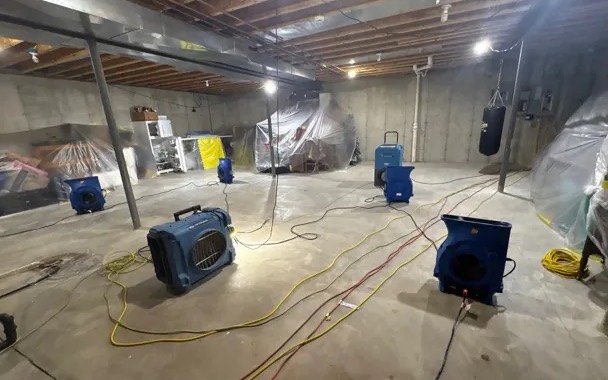
Large dehumidifiers and air movers dry walls, framing and slab over several days.
Step 4: Inspection and Clearance for Repair
Final readings confirm the basement is dry and ready for drywall and flooring repairs.
Common Causes of Basement Water Damage in Glenwood
Plumbing Leaks or Pipe Bursts
Supply lines, drain pipes and water heaters in the basement can leak or burst onto the floor.
High Water Table and Hydrostatic Pressure
A high water table presses groundwater against the slab and walls, forcing it inside.
Foundation Cracks and Seepage
Cracks in foundation walls and the slab let groundwater seep in during wet weather.
Sump Pump Malfunction or Power Loss
A sump pump that fails mechanically or loses power during a storm lets groundwater rise.
Both Residential & Commercial Basement Water Removal
Residential Basement Water Removal
Families should keep children and pets away from basement water until power is safe and the type of water is known.
Commercial Basement Water Removal
In restaurants and shops, basement water near food or stock storage needs removal and cleaning before those areas are used again.
Basement Water Removal vs. DIY: When to Call the Pros
A small puddle on bare concrete can be handled with a wet vac, towels and a dehumidifier. Call local water damage pros if water reached carpet, drywall or framing, or covers much of the floor.
Basement Water Removal Cost in Glenwood, IA
A basement pumped out the same day in Glenwood usually needs less drywall and flooring replaced than one left wet for days.
Additional Services
Antimicrobial treatment, contents cleaning and repairs after drying add to the cost.
Contamination Level
Sewage or dirty water needs protective gear, removal and disinfection, which costs more.
Access and Complexity
Narrow stairs, low ceilings and crowded storage areas make the work slower and longer.
Does Insurance Cover Basement Water Removal?
Many homeowner policies cover sudden basement water from a burst pipe but not groundwater seepage. Sewer backup coverage is often an add-on, so check yours.
Benefits of Hiring Local Pros for Basement Water Removal in Glenwood
24/7 Emergency Response
Help is available day or night when water is rising in the basement.
Post-Service Moisture Verification
Final readings are recorded before equipment leaves, so you know the basement is dry.
Industry Drying Standards
Water removal and drying follow industry water damage standards, with readings at every visit.
24/7 Emergency Basement Water Removal in Glenwood
If water is near outlets, the furnace or the electrical panel, stay out of it. Call (402) 704-4921 for help in Glenwood and wait for power to be made safe.
Call Now (402) 704-4921Local Basement Water Removal Coverage for Plattsmouth, Malvern and Bellevue
Nearby areas served for basement water removal include Plattsmouth, Malvern and Bellevue, with the same pumping and drying steps used in Glenwood.
- Basement Water Removal in Plattsmouth
- Basement Water Removal in Malvern
- Basement Water Removal in Bellevue
- Basement Water Removal in Tabor
- Basement Water Removal in Treynor
- Basement Water Removal in Council Bluffs
- Basement Water Removal in Papillion
- Basement Water Removal in Midtown
- Emergency Damage Restoration in 51534
- Storm Damage Restoration in 51534
- Water Damage Restoration in 51534
- Water Extraction Service in 51534
- Water Leak Detection in 51534
- Water Removal Service in 51534
Basement Water Removal FAQs
Can I dry my basement myself with fans?
Fans help with surface water, but walls and concrete need dehumidifiers and readings to dry fully.
Why is basement dehumidification important after pumping?
Walls and concrete keep releasing moisture for days. Dehumidifiers remove it so the basement does not stay damp.
How does a basement moisture inspection work?
Moisture meters and thermal cameras check walls, floors and the slab, including behind finished walls and under flooring.
What is emergency basement flooding response?
Help any hour to make power safe, stop the source, pump out water and start drying before more damage sets in.
What causes basement floor water damage?
Storm seepage, burst pipes, appliance leaks, foundation cracks and sewer backups through floor drains are the usual sources.