Fremont, NE · Dodge County
Basement Water Removal in Fremont, NEBasement Dehumidification & Basement Moisture Inspection
Basement Water Removal in Fremont runs from basement water pump out and basement drying services to basement dehumidification.
Answered 24/7
Expert Basement Water Removal in Fremont, Cedar Bluffs, Nickerson and Arlington
A basement that looks dry a day after a flood in Fremont can still hold a lot of water in the slab, the bottom of the walls and under flooring. That hidden water causes the musty smell many basements have.
Homes in Fremont and nearby Cedar Bluffs, Nickerson and Arlington with basements face storm seepage, sewer backups and plumbing leaks. Help with basement water removal covers pump-out, wall and floor drying and dehumidification.
Specialized Basement Water Removal for Fremont
Basement Dehumidification
After drying, a household dehumidifier may still be needed to keep basement humidity in a healthy range.
Basement Moisture Inspection
Readings are recorded at each visit, giving you and your insurer a clear record of the drying.
Basement Wall Drying
Concrete and block walls dry with directed airflow and dehumidification, which pull water out of the masonry.
Sump Pump Failure Water Cleanup
Cleanup after a sump failure includes drying the area around the pit and noting whether the pump, switch or power was the cause.
Emergency Basement Flooding
Emergency response starts with making power safe, stopping the source if possible and pumping out the water.
Warning Signs You Need Basement Water Removal
Efflorescence on Concrete Walls
White, powdery deposits on concrete walls mean water is passing through the masonry.
Sump Pump Failure or Overflow
A sump pit that is full, overflowing or has a pump that will not start means water is about to spread.
Water Stains on Walls or Ceiling
Stains on lower walls or the ceiling below a bathroom or kitchen point to a leak.
Gurgling Sounds From Drains
Gurgling floor drains or slow drains can be an early sign of a sewer line problem.
How Basement Water Removal Works in Fremont
Step 1: Source Control and Water Pump Out
The leak is shut off and standing water is pumped out, starting at the lowest point.
Step 2: Water Extraction
Extractors pull water from carpet, pad and concrete, and wet vacs clear corners and stairs.
Step 3: Dehumidification and Drying
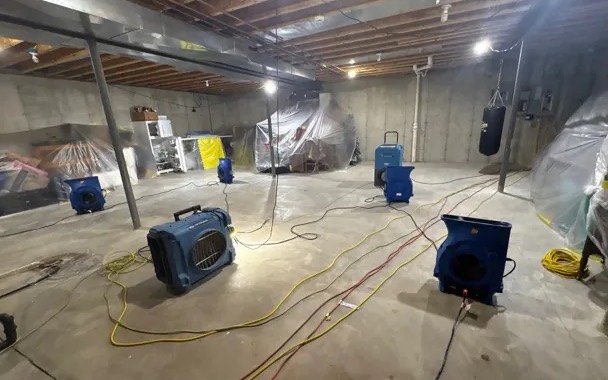
Large dehumidifiers and air movers dry walls, framing and slab over several days.
Step 4: Inspection and Clearance for Repair
Final readings confirm the basement is dry and ready for drywall and flooring repairs.
Common Causes of Basement Flooding in Fremont
Heavy Rainfall and Storm Flooding
Heavy rain saturates the soil and pushes water through walls, cracks and the floor joint.
Clogged or Damaged Gutters
Clogged gutters and short downspouts dump roof water right next to the foundation.
Sewer Line Backups and Blockages
A blocked sewer line can push wastewater up through basement floor drains and toilets.
Sump Pump Malfunction or Power Loss
A sump pump that fails mechanically or loses power during a storm lets groundwater rise.
House and Business Basement Water Removal in Fremont
Residential Basement Water Removal
Finished basements used as bedrooms or family rooms need careful moisture checks behind walls and under flooring, since that is where water hides.
Commercial Basement Water Removal
Businesses with below-grade storage need wet inventory moved out and documented. Drying is planned around daily operations wherever possible.
Basement Water Removal vs. DIY: When to Call the Pros
You can move belongings up off the floor and run the dehumidifier you already own. Drying soaked walls and slab needs larger equipment and readings to confirm the job is done.
Understanding Basement Water Removal Pricing
A basement pumped out the same day in Fremont usually needs less drywall and flooring replaced than one left wet for days.
Drying Time Required
Basements dry slowly, and each extra day of equipment adds to the total.
Access and Complexity
Narrow stairs, low ceilings and crowded storage areas make the work slower and longer.
Contamination Level
Sewage or dirty water needs protective gear, removal and disinfection, which costs more.
Does Insurance Cover Basement Water Removal?
Flooding from outside water usually needs separate flood insurance. Water from a broken pipe or appliance inside is more often covered.
The Value of Professional Basement Water Removal
Detailed Damage Documentation
Photos, readings and drying logs are kept to support your insurance claim.
Contamination Safety Protocols
Sewage and dirty water are handled with protective gear, containment and disinfection.
Industry Drying Standards
Water removal and drying follow industry water damage standards, with readings at every visit.
24/7 Basement Water Removal When You Need It
Standing water in a basement soaks walls and floors by the hour. Call (402) 704-4921 for basement water removal in Fremont at any time, day or night.
Call Now (402) 704-4921Communities Served for Basement Water Removal
Nearby areas served for basement water removal include Cedar Bluffs, Nickerson and Arlington, with the same pumping and drying steps used in Fremont.
- Basement Water Removal in Cedar Bluffs
- Basement Water Removal in Nickerson
- Basement Water Removal in Arlington
- Basement Water Removal in Colon
- Basement Water Removal in Valley
- Basement Water Removal in Mead
- Basement Water Removal in Hooper
- Basement Water Removal in North Bend
- Emergency Damage Restoration in 68025
- Storm Damage Restoration in 68025
- Water Damage Restoration in 68025
- Water Extraction Service in 68025
- Water Leak Detection in 68025
- Water Removal Service in 68025
- Emergency Damage Restoration in 68026
- Storm Damage Restoration in 68026
Common Basement Water Removal Questions Answered
What should I do right after basement flooding?
Make power safe, avoid sewage, move belongings above the water, take photos and call for water removal.
How is basement wall drying done?
Wet drywall is cut back, insulation removed and directed airflow and dehumidifiers dry the studs and masonry.
What is emergency basement flooding response?
Help any hour to make power safe, stop the source, pump out water and start drying before more damage sets in.
How long does basement drying take?
Often several days or longer, because concrete and cool basement air hold moisture. Daily readings show when it is done.
What equipment is used for basement water extraction?
Submersible pumps, extractors, wet vacs, air movers, large dehumidifiers and moisture meters to confirm drying.