Wahoo, NE · Saunders County
Basement Water Removal in Wahoo, NEBasement Water Pump Out & Basement Wall Drying
Basement Water Removal in Wahoo runs from basement water pump out and basement drying services to basement dehumidification.
Answered 24/7
Expert Basement Water Removal in Wahoo, Colon, Mead and Ceresco
In Wahoo, a finished basement or lower level takes more work after a flood. Carpet, pad, laminate, drywall and insulation all trap water against the concrete and framing.
In Wahoo, when a basement or below-grade room takes on water, it usually follows heavy rain, a sewer backup or a burst pipe. Local water extraction experts serve Wahoo, Colon, Mead and Ceresco, pumping water out and drying the space.
Professional Basement Water Removal Offerings
Basement Water Pump Out
When water is more than an inch or two deep, pumps move it far faster than wet vacs, which limits how long walls sit in water.
Basement Wall Drying
Basement walls are checked with moisture meters. Wet drywall is cut back above the water line, and insulation behind it is removed.
Basement Floor Water Damage
Flooring that buckled or swelled is removed. Tile and sealed concrete can often be cleaned and dried in place.
Basement Dehumidification
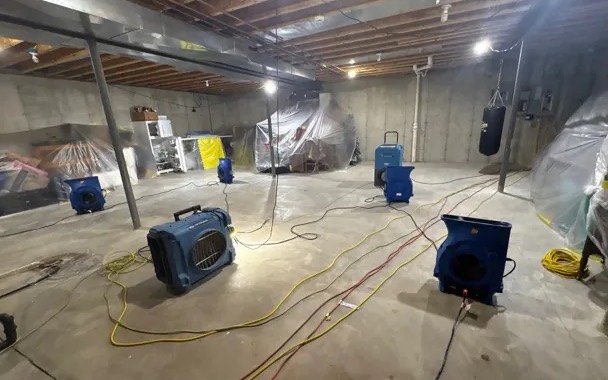
Dehumidifiers run continuously during drying, and their output is checked to track how much water is still coming out of the materials.
Emergency Basement Flooding
Help is available any hour when water is rising in the basement from a storm, a sewer backup or a burst pipe.
When to Call for Basement Water Removal in Wahoo
Sump Pump Failure or Overflow
A sump pit that is full, overflowing or has a pump that will not start means water is about to spread.
Standing Water in Basement
Standing water anywhere on the basement floor needs to be pumped out before it soaks the walls.
High Humidity and Condensation
Water on pipes and windows, or a constantly clammy feel, means basement humidity is too high.
Efflorescence on Concrete Walls
White, powdery deposits on concrete walls mean water is passing through the masonry.
How Basement Water Removal Works in Wahoo
Step 1: Source Control and Water Pump Out
The leak is shut off and standing water is pumped out, starting at the lowest point.
Step 2: Water Extraction
Extractors pull water from carpet, pad and concrete, and wet vacs clear corners and stairs.
Step 3: Dehumidification and Drying
Large dehumidifiers and air movers dry walls, framing and slab over several days.
Step 4: Inspection and Clearance for Repair
Final readings confirm the basement is dry and ready for drywall and flooring repairs.
Sources of Basement Water Problems
High Water Table and Hydrostatic Pressure
A high water table presses groundwater against the slab and walls, forcing it inside.
Clogged or Damaged Gutters
Clogged gutters and short downspouts dump roof water right next to the foundation.
Plumbing Leaks or Pipe Bursts
Supply lines, drain pipes and water heaters in the basement can leak or burst onto the floor.
Sump Pump Malfunction or Power Loss
A sump pump that fails mechanically or loses power during a storm lets groundwater rise.
Professional Basement Water Removal for All Properties
Residential Basement Water Removal
In homes, a wet basement often means damaged carpet, drywall and stored belongings, plus a furnace or water heater sitting in water. Water is pumped out and the space dried.
Commercial Basement Water Removal
In commercial buildings, basements often house mechanical rooms and storage. Water is removed quickly so systems can be checked and restarted safely.
The Risks of DIY Basement Water Removal
Water that came up through a floor drain may be sewage. Avoid touching it, keep children and pets away and call local water extraction experts for cleanup with protective gear and disinfection.
Factors Affecting Basement Water Removal Cost
The pros look at water depth, water type and basement finishes before pricing basement water removal in Wahoo, then explain the scope.
Water Depth and Volume
Deeper water takes more pumping time and usually means more materials got wet.
Contamination Level
Sewage or dirty water needs protective gear, removal and disinfection, which costs more.
Basement Square Footage
Larger basements need more extraction, more drying equipment and more days of drying.
Does Insurance Cover Basement Water Removal?
Photograph the water level, damaged belongings and appliances before cleanup, and keep receipts for emergency pumping and drying equipment for your adjuster.
Why Choose Local Pros for Basement Water Removal in Wahoo
Post-Service Moisture Verification
Final readings are recorded before equipment leaves, so you know the basement is dry.
Methodical Water Removal Process
Water is removed in a set order: pump-out, extraction, removal of soaked materials, then drying.
Contamination Safety Protocols
Sewage and dirty water are handled with protective gear, containment and disinfection.
Round-the-Clock Basement Water Removal for Wahoo
The faster a basement is pumped out, the more can be saved. Call (402) 704-4921 for basement water removal in Wahoo as soon as you see water.
Call Now (402) 704-4921Basement Water Removal Serving Wahoo and Surroundings
Need basement water removal outside Wahoo? Service also covers Colon, Mead and Ceresco, including emergency help during storms.
- Basement Water Removal in Colon
- Basement Water Removal in Mead
- Basement Water Removal in Ceresco
- Basement Water Removal in Yutan
- Basement Water Removal in Cedar Bluffs
- Basement Water Removal in Valparaiso
- Basement Water Removal in Valley
- Basement Water Removal in Ashland
- Emergency Damage Restoration in 68066
- Storm Damage Restoration in 68066
- Water Damage Restoration in 68066
- Water Extraction Service in 68066
- Water Leak Detection in 68066
- Water Removal Service in 68066
Frequently Asked Basement Water Removal Questions
How long does basement drying take?
Often several days or longer, because concrete and cool basement air hold moisture. Daily readings show when it is done.
What is involved in basement water removal?
Making power safe, pumping out standing water, extracting floors and carpet, removing soaked materials and dehumidifying until dry.
What is the difference between a pump out and extraction?
A pump out removes deep standing water. Extraction pulls the remaining water from carpet, pad and floors.
What equipment is used for basement water extraction?
Submersible pumps, extractors, wet vacs, air movers, large dehumidifiers and moisture meters to confirm drying.
Does basement flood cleanup include mold prevention?
Fast drying is the main prevention. Wood and concrete that stayed wet can be treated with an antimicrobial once dry.