Lincoln, NE · Lancaster County
Basement Water Removal in Lincoln, NESump Pump Failure Water Cleanup & Basement Wall Drying
Basement Water Removal in Lincoln includes basement water pump out, basement drying services and basement moisture inspection.
Answered 24/7
Basement Water Removal Solutions for Lincoln Homeowners
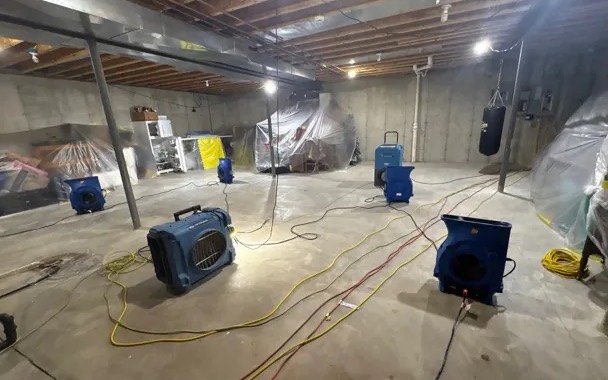
Dehumidification is the slow but necessary part of basement water removal in Lincoln. Pumps remove standing water quickly, but walls and concrete keep releasing moisture for days.
Homes in Lincoln and nearby Waverly, Hickman and Ceresco with basements face storm seepage, sewer backups and plumbing leaks. Help with basement water removal covers pump-out, wall and floor drying and dehumidification.
Basement Water Removal Services in Lincoln
Sump Pump Failure Water Cleanup
A backup pump or battery system is worth discussing with a plumber after the cleanup, since sump failures often repeat in storms.
Basement Wall Drying
Basement walls are checked with moisture meters. Wet drywall is cut back above the water line, and insulation behind it is removed.
Basement Dehumidification
Dehumidifiers run continuously during drying, and their output is checked to track how much water is still coming out of the materials.
Basement Water Pump Out
A pump-out removes standing water from the basement with submersible pumps, discharging it outside and away from the foundation.
Basement Moisture Inspection
Readings are recorded at each visit, giving you and your insurer a clear record of the drying.
Warning Signs You Need Basement Water Removal
Efflorescence on Concrete Walls
White, powdery deposits on concrete walls mean water is passing through the masonry.
Soggy or Wet Carpeting
Carpet that feels damp or smells sour is holding water in the pad against the concrete.
Sump Pump Failure or Overflow
A sump pit that is full, overflowing or has a pump that will not start means water is about to spread.
Warped or Buckling Flooring
Flooring that buckles, lifts or feels spongy has water trapped between it and the slab.
How Basement Water Removal Works in Lincoln
Step 1: Safety Assessment and Pump Out
Electrical hazards are checked, then deep water is pumped outside away from the foundation.
Step 2: Content Removal and Damage Documentation
Wet belongings are moved, and photos record the water level and damaged materials.
Step 3: Targeted Water Removal and Drying
Carpet is extracted, wet drywall is cut back and air is aimed at walls and the slab.
Step 4: Sanitization and Moisture Control
Surfaces touched by dirty water are disinfected, and dehumidifiers keep humidity low.
What Causes Water Damage in Basements
Heavy Rainfall and Storm Flooding
Heavy rain saturates the soil and pushes water through walls, cracks and the floor joint.
Plumbing Leaks or Pipe Bursts
Supply lines, drain pipes and water heaters in the basement can leak or burst onto the floor.
Improper Landscape Grading
Soil that slopes toward the house directs rainwater straight to the basement walls.
Foundation Cracks and Seepage
Cracks in foundation walls and the slab let groundwater seep in during wet weather.
House and Business Basement Water Removal in Lincoln
Residential Basement Water Removal
Older homes with a basement may see seepage with every heavy storm. Water removal handles the current damage, and the entry point is noted for a waterproofing contractor.
Commercial Basement Water Removal
Multi-unit buildings with shared basements need each storage and laundry area pumped, dried and documented for the property manager.
Professional Basement Water Removal Versus Do-It-Yourself
Checking appliance hoses and extending downspouts away from the house are good DIY steps before storm season. Once the basement floods, call (402) 704-4921 for help.
Understanding Basement Water Removal Pricing
Waterproofing and drainage work are separate costs. In Lincoln, they may be needed to stop the next flood.
Access and Complexity
Narrow stairs, low ceilings and crowded storage areas make the work slower and longer.
Contamination Level
Sewage or dirty water needs protective gear, removal and disinfection, which costs more.
Affected Materials
Finished walls, carpet and laminate take more removal work than bare concrete.
Does Insurance Cover Basement Water Removal?
Ask your adjuster early how your policy treats seepage and sewer backups, since many policies limit or exclude both kinds of water.
Advantages of Local Basement Water Removal Experts
Contamination Safety Protocols
Sewage and dirty water are handled with protective gear, containment and disinfection.
Advanced Drying Equipment
Pumps, extractors and large dehumidifiers remove water much faster than household tools.
Methodical Water Removal Process
Water is removed in a set order: pump-out, extraction, removal of soaked materials, then drying.
24/7 Emergency Basement Water Removal in Lincoln
The faster a basement is pumped out, the more can be saved. Call (402) 704-4921 for basement water removal in Lincoln as soon as you see water.
Call Now (402) 704-4921Basement Water Removal Near Lincoln: Areas Served
Nearby areas served for basement water removal include Waverly, Hickman and Ceresco, with the same pumping and drying steps used in Lincoln.
- Basement Water Removal in Waverly
- Basement Water Removal in Hickman
- Basement Water Removal in Ceresco
- Basement Water Removal in Milford
- Basement Water Removal in Crete
- Basement Water Removal in Valparaiso
- Basement Water Removal in Seward
- Basement Water Removal in Ashland
- Emergency Damage Restoration in 68501
- Storm Damage Restoration in 68501
- Water Damage Restoration in 68501
- Water Extraction Service in 68501
- Water Leak Detection in 68501
- Water Removal Service in 68501
- Emergency Damage Restoration in 68502
- Storm Damage Restoration in 68502
Basement Water Removal FAQs
What causes basement floor water damage?
Storm seepage, burst pipes, appliance leaks, foundation cracks and sewer backups through floor drains are the usual sources.
What happens during basement moisture control?
Dehumidifiers and air movers keep humidity low while materials dry, and readings confirm when the space is normal.
How is contaminated water handled in a basement?
With protective gear, containment, removal of porous materials and disinfection of hard surfaces before drying.
Why is basement dehumidification important after pumping?
Walls and concrete keep releasing moisture for days. Dehumidifiers remove it so the basement does not stay damp.
How long does basement drying take?
Often several days or longer, because concrete and cool basement air hold moisture. Daily readings show when it is done.