Laurel, NE · Cedar County
Basement Water Removal in Laurel, NEBasement Dehumidification & Basement Moisture Inspection
After a burst pipe or storm, Basement Water Removal in Laurel means basement water pump out, basement wall drying and basement drying services.
Answered 24/7
Basement Water Removal Solutions for Laurel Homeowners
In Laurel homes with a basement or below-grade room, water usually comes from storms, sewer backups or plumbing leaks overhead. The source decides how the water is handled and what can be saved.
A single storm or burst pipe in Laurel can flood a basement. Local basement drying experts serve Laurel and nearby Randolph and Wayne, with help available around the clock.
The Basement Water Removal Process in Laurel
Basement Dehumidification
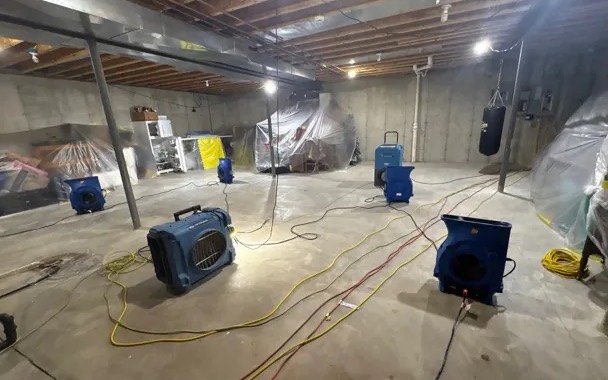
Dehumidifiers run continuously during drying, and their output is checked to track how much water is still coming out of the materials.
Basement Moisture Inspection
Readings are recorded at each visit, giving you and your insurer a clear record of the drying.
Basement Wall Drying
Opening the bottom of finished walls lets air reach the studs and sill plate, which otherwise stay wet behind the drywall.
Basement Drying Services
Drying plans for basements account for cool air and thick concrete, which hold moisture longer than upper floors.
Sump Pump Failure Water Cleanup
A backup pump or battery system is worth discussing with a plumber after the cleanup, since sump failures often repeat in storms.
Indicators You Need Professional Water Removal
Warped or Buckling Flooring
Flooring that buckles, lifts or feels spongy has water trapped between it and the slab.
Musty Odors and Mold Smell
A musty or damp smell in the basement points to wet materials hidden somewhere in the space.
Soggy or Wet Carpeting
Carpet that feels damp or smells sour is holding water in the pad against the concrete.
Mold or Mildew
Dark spots on drywall, framing or stored items mean the area has stayed wet for days.
How Basement Water Removal Works in Laurel
Step 1: Safety Assessment and Pump Out
Electrical hazards are checked, then deep water is pumped outside away from the foundation.
Step 2: Content Removal and Damage Documentation
Wet belongings are moved, and photos record the water level and damaged materials.
Step 3: Targeted Water Removal and Drying
Carpet is extracted, wet drywall is cut back and air is aimed at walls and the slab.
Step 4: Sanitization and Moisture Control
Surfaces touched by dirty water are disinfected, and dehumidifiers keep humidity low.
What Causes Water Damage in Basements
Heavy Rainfall and Storm Flooding
Heavy rain saturates the soil and pushes water through walls, cracks and the floor joint.
Sewer Line Backups and Blockages
A blocked sewer line can push wastewater up through basement floor drains and toilets.
Plumbing Leaks or Pipe Bursts
Supply lines, drain pipes and water heaters in the basement can leak or burst onto the floor.
Sump Pump Malfunction or Power Loss
A sump pump that fails mechanically or loses power during a storm lets groundwater rise.
House and Business Basement Water Removal in Laurel
Residential Basement Water Removal
Finished basements used as bedrooms or family rooms need careful moisture checks behind walls and under flooring, since that is where water hides.
Commercial Basement Water Removal
Businesses with below-grade storage need wet inventory moved out and documented. Drying is planned around daily operations wherever possible.
The Risks of DIY Basement Water Removal
Do not step into basement water if cords, outlets or appliances are in it. Shut off power at the panel only if you can reach it from a dry spot, then call (402) 704-4921.
Basement Water Removal Cost in Laurel, NE
A basement pumped out the same day in Laurel usually needs less drywall and flooring replaced than one left wet for days.
Access and Complexity
Narrow stairs, low ceilings and crowded storage areas make the work slower and longer.
Water Depth and Volume
Deeper water takes more pumping time and usually means more materials got wet.
Time of Service
Night, weekend and storm calls can cost more than a scheduled weekday visit.
Does Insurance Cover Basement Water Removal?
Ask your adjuster early how your policy treats seepage and sewer backups, since many policies limit or exclude both kinds of water.
Why Choose Local Pros for Basement Water Removal in Laurel
Post-Service Moisture Verification
Final readings are recorded before equipment leaves, so you know the basement is dry.
24/7 Emergency Response
Help is available day or night when water is rising in the basement.
Focus on Drying Outcomes
Drying continues until readings are normal, not just until surfaces look dry.
24/7 Basement Water Removal When You Need It
Water still rising in the basement? Call (402) 704-4921 now for basement water removal in Laurel before the water reaches finished rooms and stored belongings.
Call Now (402) 704-4921Basement Water Removal Serving Laurel and Surroundings
The places below are also served, and each one has its own page.
- Basement Water Removal in Randolph
- Basement Water Removal in Wayne
- Basement Water Removal in Hartington
- Basement Water Removal in Osmond
- Basement Water Removal in Pierce
- Basement Water Removal in Pender
- Basement Water Removal in Wisner
- Basement Water Removal in Plainview
- Emergency Damage Restoration in 68745
- Storm Damage Restoration in 68745
- Water Damage Restoration in 68745
- Water Extraction Service in 68745
- Water Leak Detection in 68745
- Water Removal Service in 68745
Answers to Top Basement Water Removal Queries
What should I do right after basement flooding?
Make power safe, avoid sewage, move belongings above the water, take photos and call for water removal.
What equipment is used for basement water extraction?
Submersible pumps, extractors, wet vacs, air movers, large dehumidifiers and moisture meters to confirm drying.
How is contaminated water handled in a basement?
With protective gear, containment, removal of porous materials and disinfection of hard surfaces before drying.
Why is basement dehumidification important after pumping?
Walls and concrete keep releasing moisture for days. Dehumidifiers remove it so the basement does not stay damp.
What is involved in basement water removal?
Making power safe, pumping out standing water, extracting floors and carpet, removing soaked materials and dehumidifying until dry.