West Point, NE · Cuming County
Basement Water Damage Restoration in West Point, NEBasement Floor Water Removal & Basement Sewer Backup Cleanup
Basement Water Damage Restoration in West Point runs from basement water extraction and basement floor water removal to basement dehumidification.
Answered 24/7
Expert Basement Water Damage Restoration Serving West Point
Water in a basement does not stay on the floor. It wicks up drywall, soaks insulation and seeps into wood framing. In West Point, a few inches of water can damage walls up to two feet high.
One burst pipe or heavy storm in West Point can flood a basement. Local water removal pros serve West Point and nearby Beemer, Scribner and Oakland, with help available around the clock.
Complete Basement Water Damage Restoration for West Point
Basement Floor Water Removal
Wet carpet pad is removed from basement floors, since it holds water against the concrete and dries poorly.
Basement Sewer Backup Cleanup
Porous materials touched by sewage, such as carpet, pad and lower drywall, are removed. Concrete and framing are cleaned and disinfected.
Basement Wall Drying
Concrete and block walls are dried with directed airflow and dehumidifiers, and checked with meters until readings drop.
Basement Dehumidification
Dehumidification continues until humidity and material readings are normal. Turning it off too early lets moisture return.
Basement Drying Services
Drying a basement takes longer than drying an upper floor because the air is cool and the concrete holds moisture.
Warning Signs You Need Basement Water Damage Restoration
Mold on Surfaces
Dark spots on drywall, framing or stored boxes mean the area has stayed wet for days.
High Humidity Levels Below-Grade
A basement that stays damp and clammy even on dry days has a moisture source that needs attention.
Warped or Buckling Basement Floors
Laminate, wood or vinyl flooring that buckles or lifts in the basement has water underneath.
Sump Pump Failure or Overflow
A sump pump that runs constantly, fails to start or lets the pit overflow puts the basement at risk.
How Basement Water Damage Restoration Works in West Point
Step 1: Water Removal
Pumps and extractors remove standing water from the basement floor, starting at the lowest point.
Step 2: Targeted Moisture Evaporation
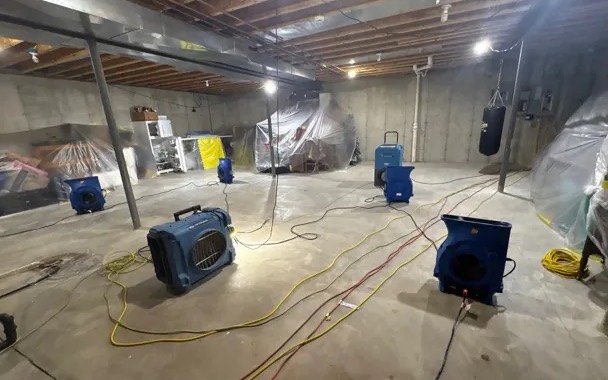
Air movers are aimed at wet walls, framing and the slab to speed evaporation.
Step 3: Humidity Control
Large dehumidifiers pull moisture from the basement air, with readings checked every day.
Step 4: Final Verification and Restoration
Final readings confirm the basement is dry, and the space is ready for drywall and flooring repairs.
Why Basement Water Damage Occurs in West Point
Window Well Flooding
Window wells without drains or covers fill with rain and leak through basement windows.
Faulty Basement Waterproofing
Old or failed waterproofing on foundation walls lets water through during wet weather.
Clogged Floor Drains
A floor drain blocked by debris cannot carry off water from a leak or overflow, so it spreads across the basement floor.
Stormwater Runoff Into Lower Levels
Heavy rain running off hard ground or a sloped yard can pour down stairwells and under doors into below-grade rooms.
Basement Water Damage Restoration for Homes and Businesses in West Point
Residential Basement Water Damage Restoration
Finished basements used as living space need carpet, pad and lower drywall checked carefully. Soaked materials are removed so the walls and slab can dry.
Commercial Basement Water Damage Restoration
Businesses with below-grade storage need inventory moved out of the water quickly. Wet stock is separated and documented for insurance.
DIY vs. Professional Basement Water Damage Restoration in West Point
If a small leak left a puddle on bare concrete, a wet vac and a dehumidifier may be enough. Call local water removal pros if water reached drywall, carpet or framing, or if it came from a sewer drain.
What Influences Basement Water Damage Restoration Cost in West Point
In West Point, basement jobs often run longer than upper-floor jobs because concrete dries slowly. Equipment days make up much of the bill.
Material Saturation
Finished basements with carpet, drywall and insulation take more removal work than bare concrete.
Emergency Service
Night, weekend and storm calls can cost more than a scheduled visit.
Secondary Damage
Damage to furnaces, water heaters and belongings adds repair and replacement costs.
Does Insurance Cover Basement Water Damage Restoration?
Coverage for groundwater seepage and backups varies widely between policies. Ask your adjuster whether your policy includes it before work begins.
Advantages of Hiring Local Pros in West Point for Basement Water Damage Restoration
24/7 Emergency Response
Help is available day or night when water is rising in the basement.
Structural Integrity Assessment
Walls, stairs and framing are checked for damage before work begins in the basement.
Water Type Handling
Clean water, gray water and sewage are each handled with the right protection and removal steps.
West Point Emergency Basement Water Damage Restoration Response
Water rising in your basement in West Point? Shut off power to the basement if it is safe, move what you can and call (402) 704-4921. Help is available 24/7.
Call Now (402) 704-4921Local Basement Water Damage Restoration Coverage: West Point and Beyond
The places below are also served, and each one has its own page.
- Basement Water Damage Restoration in Beemer
- Basement Water Damage Restoration in Scribner
- Basement Water Damage Restoration in Oakland
- Basement Water Damage Restoration in Lyons
- Basement Water Damage Restoration in Wisner
- Basement Water Damage Restoration in Hooper
- Basement Water Damage Restoration in Pender
- Basement Water Damage Restoration in Stanton
- Emergency Damage Restoration in 68788
- Storm Damage Restoration in 68788
- Water Damage Restoration in 68788
- Water Extraction Service in 68788
- Water Leak Detection in 68788
- Water Removal Service in 68788
Frequently Asked Questions About Basement Water Damage Restoration
Does basement mold prevention need special steps after flooding?
Fast drying is the main step. Wood and concrete that stayed wet can be treated with an antimicrobial once dry.
Should I try below-grade waterproofing myself after flooding?
Sealing a small crack can be a DIY job, but drying must come first, and larger waterproofing work should go to a contractor.
How is basement restoration documented for insurance?
With photos of the water level and damage, moisture readings, a list of removed materials and daily drying logs.
What are signs of hidden moisture after below-grade water extraction?
Musty smells, tide lines on walls, damp carpet edges and moisture readings that stay high in walls or the slab.
What causes the most common below-grade leaks in homes?
Sump pump failures, foundation cracks, clogged drain tile, sewer backups and burst pipes in the basement ceiling.