Plattsmouth, NE · Cass County
Basement Water Damage Restoration in Plattsmouth, NEEmergency Basement Flood Cleanup & Basement Water Extraction
Basement Water Damage Restoration in Plattsmouth includes emergency basement flood cleanup, basement sewer backup cleanup and basement wall drying.
Answered 24/7
Expert Basement Water Damage Restoration Serving Plattsmouth
In a Plattsmouth home with a basement and a sump pump, a pump that fails during heavy rain lets water rise fast. Furnaces, water heaters, washers and stored belongings all sit at floor level and take the damage first.
A finished basement or lower level in Plattsmouth or Glenwood, Bellevue and Papillion can hide old moisture behind drywall and flooring. The pros find the water and dry the space before more damage sets in.
Professional Basement Water Damage Restoration Offered in Plattsmouth
Emergency Basement Flood Cleanup
A flooded basement can damage furnaces, water heaters and stored items quickly. Fast pumping limits how much is lost.
Basement Water Extraction
Submersible pumps remove deep standing water, then portable extractors pull water from carpet, pad and the concrete floor.
Basement Wall Drying
Finished basement walls hide wet insulation and framing. Removing the bottom of the drywall lets air reach the cavity.
Basement Mold Prevention
Fast extraction and drying are the main ways to limit microbial growth in a basement. Surfaces that stayed wet can be treated once dry.
Basement Drying Services
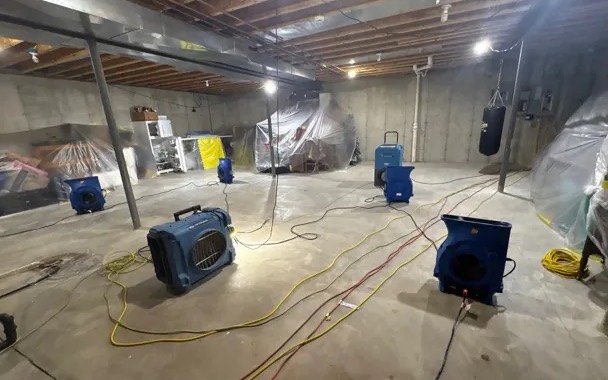
Air movers and dehumidifiers are placed to dry walls, framing and the slab. Below-grade rooms dry slowly, so readings are taken daily.
Warning Signs You Need Basement Water Damage Restoration
Sump Pump Failure or Overflow
A sump pump that runs constantly, fails to start or lets the pit overflow puts the basement at risk.
Efflorescence on Concrete Walls
White, chalky deposits on concrete walls mean water is moving through the concrete and leaving minerals behind.
Condensation on Windows or Pipes
Water beading on cold pipes or basement windows shows high humidity that keeps materials damp.
Wet or Stained Basement Walls
Dark, wet patches or tide lines on basement walls show where water seeped in or wicked up.
How Basement Water Damage Restoration Works in Plattsmouth
Step 1: Floodwater Pump-Out
Submersible pumps remove deep water, and electrical hazards are checked before anyone walks in it.
Step 2: Deep Moisture Extraction
Extractors pull water from carpet, pad and the concrete floor after the deep water is gone.
Step 3: Air Circulation and Drying
Air movers keep dry air moving across walls and floors throughout the basement.
Step 4: Dehumidification and Verification
Dehumidifiers run until humidity and material readings confirm the basement is dry.
Frequent Sources of Water Damage in Plattsmouth
Overland Flooding From Storms
Heavy storms and snowmelt can send surface water into basements through doors and walls.
Failed or Clogged Drain Tile
Clogged or collapsed drain tile around the foundation lets water build up against the walls.
Sewer Line Backups
A blocked or overloaded sewer line pushes wastewater up through basement drains and toilets.
High Water Table and Hydrostatic Pressure
A high water table pushes groundwater up through the slab and into the joints between wall and floor.
Basement Water Damage Restoration for Homes and Businesses in Plattsmouth
Residential Basement Water Damage Restoration
In homes, a flooded basement often means damaged carpet, drywall, a furnace or water heater and stored belongings. Water is pumped out, contents are moved and the space is dried.
Commercial Basement Water Damage Restoration
In commercial buildings, basements hold mechanical rooms, storage and sometimes offices. Water is removed and equipment areas are dried so systems can be checked and restarted.
Professional Basement Water Damage Restoration or DIY in Plattsmouth?
Do not walk into standing basement water if outlets, cords or appliances are submerged. Shut off power at the panel if you can reach it safely, then call (402) 704-4921.
Cost Considerations for Basement Water Damage Restoration in Plattsmouth
The cost of basement water damage restoration in Plattsmouth depends on how much water there is, whether it is clean or sewage and how much finished material must be removed.
Secondary Damage
Damage to furnaces, water heaters and belongings adds repair and replacement costs.
Drying Time Required
Basements dry slowly, and longer drying means more equipment days and monitoring visits.
Access Complexity
Narrow stairs, low ceilings and stored contents can make the work slower.
Does Insurance Cover Basement Water Damage Restoration?
Flood damage from rising outside water usually needs flood insurance. Water from inside the home, like a broken pipe, is more often covered.
The Value of Local Pros for Basement Water Damage Restoration in Plattsmouth
Industrial-Grade Equipment
Pumps, extractors and large dehumidifiers remove water much faster than household wet vacs and fans.
Structural Integrity Assessment
Walls, stairs and framing are checked for damage before work begins in the basement.
Containment Strategies
Plastic sheeting keeps contaminated areas separate from clean parts of the house.
Plattsmouth Emergency Basement Water Damage Restoration Response
Water rising in your basement in Plattsmouth? Shut off power to the basement if it is safe, move what you can and call (402) 704-4921. Help is available 24/7.
Call Now (402) 704-4921Regions Served for Basement Water Damage Restoration Near Plattsmouth
Need basement water damage restoration outside Plattsmouth? Service also covers Glenwood, Bellevue and Papillion, including emergency help during storms.
- Basement Water Damage Restoration in Glenwood
- Basement Water Damage Restoration in Bellevue
- Basement Water Damage Restoration in Papillion
- Basement Water Damage Restoration in Tabor
- Basement Water Damage Restoration in Springfield
- Basement Water Damage Restoration in La Vista
- Basement Water Damage Restoration in Ralston
- Basement Water Damage Restoration in Malvern
- Emergency Damage Restoration in 68048
- Storm Damage Restoration in 68048
- Water Damage Restoration in 68048
- Water Extraction Service in 68048
- Water Leak Detection in 68048
- Water Removal Service in 68048
Basement Water Damage Restoration FAQs
How is basement restoration documented for insurance?
With photos of the water level and damage, moisture readings, a list of removed materials and daily drying logs.
What is involved in basement water damage restoration?
Pumping out water, removing soaked materials, cleaning contaminated areas, drying walls, framing and concrete, and dehumidifying until readings are normal.
How long does below-grade drying take after a flood?
Often several days or longer, since concrete and cool basement air dry slowly. Daily readings show progress.
Does basement mold prevention need special steps after flooding?
Fast drying is the main step. Wood and concrete that stayed wet can be treated with an antimicrobial once dry.
What does below-grade moisture removal include beyond pumping?
Extracting carpet and pad, opening wet walls, running air movers and dehumidifiers, and checking readings until dry.